

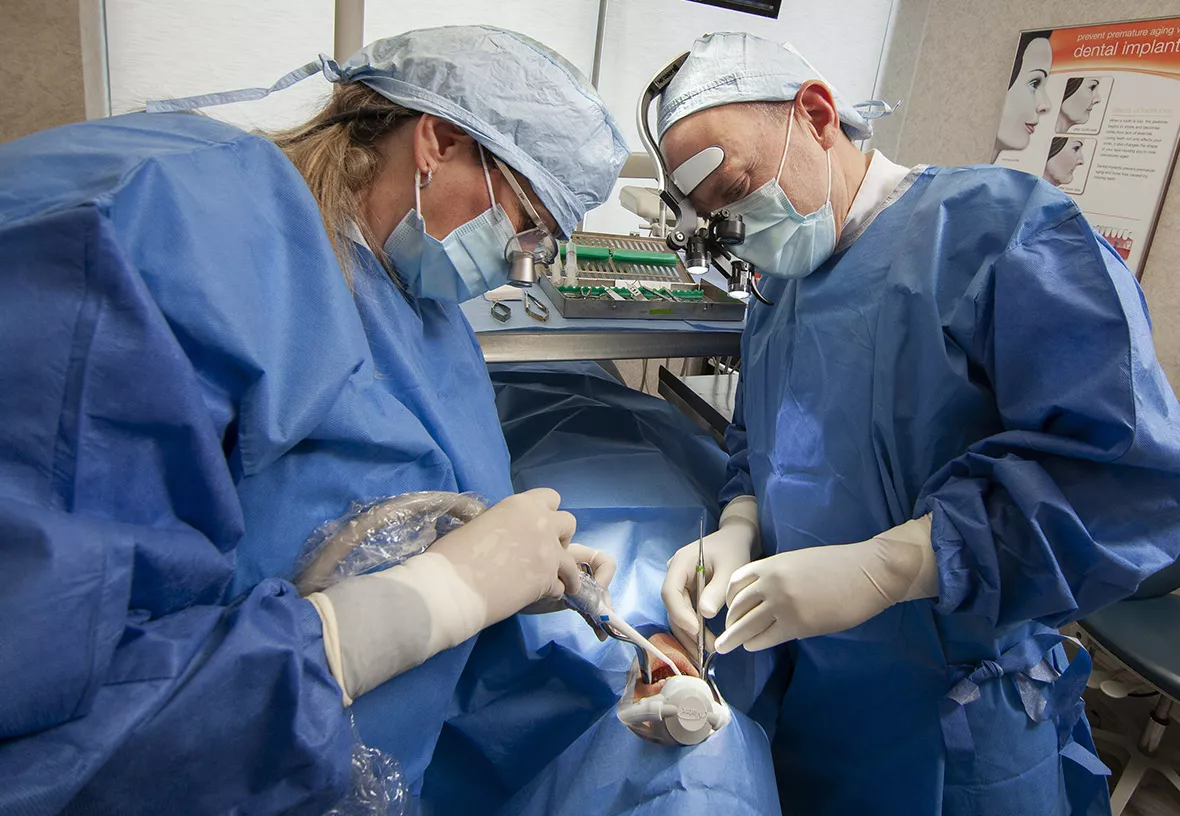
Dr. Berzin’s sedation dentistry comes with many benefits.
Though the specific effects of the three sedation options are not exactly the same, they all share many benefits. Of course, a calming, relaxing feeling is the main effect you’ll notice, which makes your entire procedure more comfortable. Sedation may help shorten your visit, simplify your procedure, and it may even help you forget the treatment entirely.
We offer three different sedation options to our patients.
Dr. Berzin and his team will rely on their decades of experience to recommend the sedation option, or options, that are right for you. Before we offer any sedation, we’ll check your blood pressure and your medical records to be certain that you’re a suitable candidate. We’ll also provide you with instructions to follow before and after your appointment—depending on the type of sedation administered.

Oral sedation
Oral sedation is medication in the form of a pill or tablet that you swallow. We’ll give you one or two doses of medicine—if two, you’ll take one before you sleep the night before your appointment, and another prior to your procedure. This produces a high level of drowsiness, but not a complete sleep. Your level of sedation, blood pressure, pulse, and oxygen level will be observed continuously throughout your procedure. While you’re under sedation, you won’t be able to drive to or from your appointment.

Intravenous sedation
With intravenous (IV) sedation, a thin needle will be inserted into your arm or hand by Dr. Berzin at the beginning of your appointment. The needle is attached to an intravenous tube which transfers the sedative straight to your bloodstream. Your blood pressure, pulse, and oxygen level will be observed continuously throughout your procedure. You might feel drowsy after the procedure is done and will need to be driven home by another adult.

Inhaled minimal sedation
With this option, you inhale nitrous oxide gas (also called “laughing gas”) through a mask that’s placed over your nose. The quantity of the sedation you get is carefully controlled by Dr. Berzin, and the effect fades quickly once the flow of gas stops. This is the only kind of sedation that can allow you to drive yourself home once the procedure is done.
Frequently Asked Questions
Will I be asleep during my implant procedure?
Not fully. With oral or IV sedation, you'll be deeply relaxed and drowsy, and many patients drift in and out of light sleep, but you can still breathe on your own and respond if spoken to. This is called conscious sedation. Many people remember little of the procedure afterward.
Will I still feel pain?
No. Sedation relieves anxiety, and your mouth is also fully numbed with local anaesthetic, just as it would be without sedation. Most patients feel some pressure but no pain.
Which type of sedation is best for dental implants?
It depends on how anxious you are and how long your procedure will be. Laughing gas suits mild nerves and shorter procedures like a single implant. Oral sedation helps with moderate anxiety. IV sedation is the deepest option and is often chosen for longer treatments like fixed implant dentures. Dr. Berzin will help you decide which option is best for you during your consultation.
Is sedation dentistry safe?
For most healthy adults, dental sedation is very safe when given by a trained dentist with proper monitoring. Before your appointment, we review your medical history and check your blood pressure. During treatment, your blood pressure, pulse and oxygen levels are monitored continuously. Dr. Berzin is authorized by the Royal College of Dental Surgeons of Ontario (RCDSO) to provide IV sedation. Our clinic also maintains the required sedation facility permit. To support safe, comfortable care, Dr. Berzin maintains current BLS and ACLS certifications, completes ongoing sedation-related continuing education, and participates in regular facility inspections and quality reviews.
Who shouldn't have sedation?
Sedation may not be suitable if you're pregnant, have untreated sleep apnea, or have certain heart, lung or liver conditions. Some medications also interact with sedatives. Tell us about your health and any medications at your consultation, and Dr. Berzin will recommend the safest option for you.
How do I prepare for sedation?
We'll give you written instructions before your appointment. For oral or IV sedation, you'll usually need to avoid eating and drinking for 8 hours beforehand and arrange for an adult to drive you home. Wear comfortable clothes with sleeves that roll up easily, and follow our instructions about any regular medications.
Can I drive myself home after sedation?
After oral or IV sedation, you'll need a responsible adult to drive you home and stay with you for the rest of the day. Don't drive, operate machinery or make important decisions for 24 hours.
How long do the effects last?
Laughing gas wears off within a few minutes of the mask coming off. Oral and IV sedation can leave you drowsy for several hours, so plan to rest at home for the remainder of the day. Most people feel back to normal the next morning.
Medical Information Reviewed by Dr. Lion Berzin, October 2026