
It’s impossible to overstate just how life changing implants can be.
Imagine getting back to the way things were before. When you have all your teeth, you eat, talk, and smile without even thinking about it. It’s natural. Effortless. But when you have gaps in your teeth, or loose dentures, suddenly the value of healthy teeth becomes abundantly—and emotionally—clear. Wouldn’t it be wonderful to turn back the clock, and regain what you’ve lost? The effortless smile. The confident chewing. The carefree chatting. You can.
Of course, dental implants come with a cost, as do all dental procedures. But most patients say the reward more than outweighs the initial investment. And here at Dr. Berzin Dental Implants, we’re qualified and prepared to provide industry-leading implant procedures. You can be confident that you’ll be thrilled with the results and the value.
Implants are a superior solution to missing teeth.
If you’re missing teeth, dental implants aren’t your only option—but they’re certainly your best option. Dr. Berzin has been dedicated to focusing his efforts on implant restorations because implants:
- restore bite force
- enable natural speech
- can last a lifetime
- help prevent bone loss
- are cost-effective
- are easy to care for
Three implant-based solutions, depending on your needs.
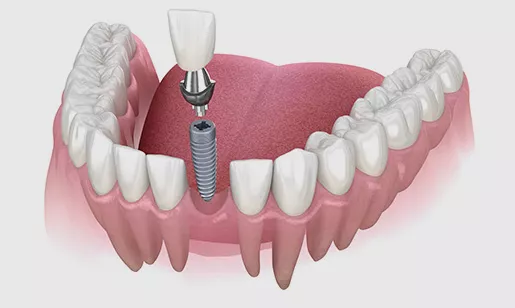
Single implants
If you’re missing one or two teeth, single implants can fill the gaps—each “tooth” on its own titanium post.
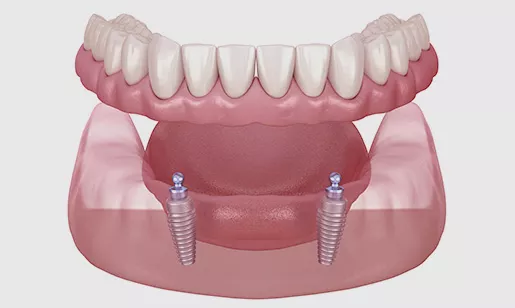
Implant-supported dentures
Unlike regular dentures that can slip, these dentures secure to two or more titanium implants.
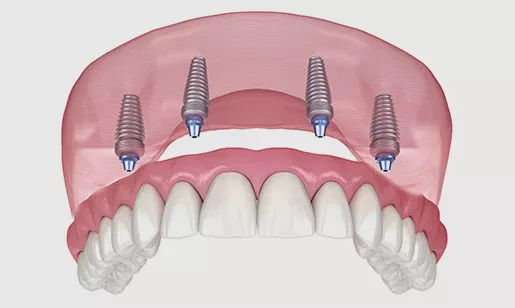
Fixed implant dentures
Your new dentures are permanently attached to four titanium implants, so they feel just like natural teeth.
Relax. You’re in good hands.
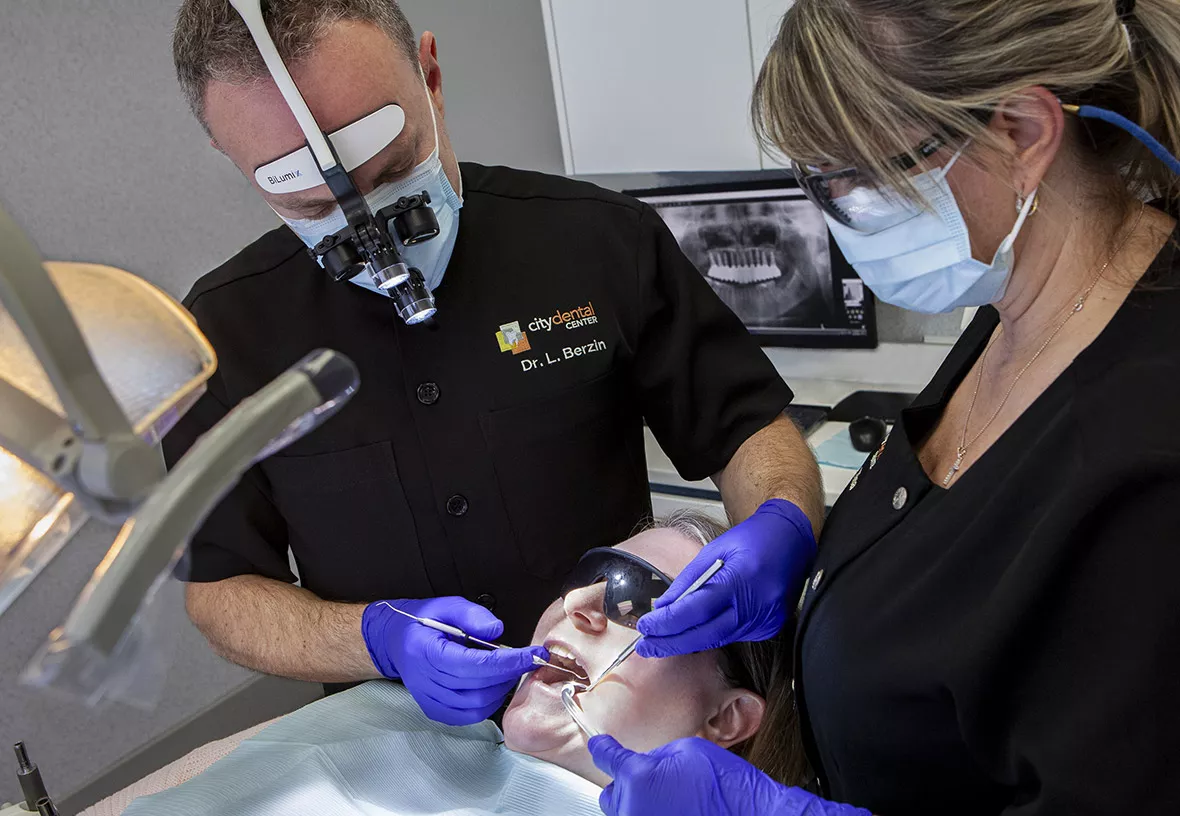
Our patient-centred approach means we go out of our way to provide an implant and post-surgery experience that’s calm, informed, and rewarding. Our office is warm and welcoming, our staff are understanding and thoughtful, and our implant procedure is designed around your comfort. Dentists refer to Dr. Berzin for dental implant placement and you’re welcome to self-refer. Learn more about Dr. Berzin’s qualifications and experience.
Sedation dentistry
If you’re anxious about your implant procedure, we can offer you oral, IV, or inhaled sedation options—we’ll help you decide which is right for you. Each of these options will help minimize pain, relieve anxiety, and make the treatment even easier to experience. We’re on your side.
Platelet-Rich Fibrin (PRF) treatment
Our PRF treatment can accelerate healing, minimize inflammation, enhance clinical results, and decrease discomfort post-surgery. The treatment involves drawing a small amount of your own blood pre-procedure, separating out the platelets (PRF), and then applying the PRF to the surgical area post-procedure.
Cost and insurance
How much do dental implants cost in Toronto?
In Toronto, a single dental implant with its crown can cost as low as $4,000, with a full arch of fixed dental implants going as high as $45,000 per arch. Your exact cost depends on how many teeth are being replaced, whether you need a bone graft or extraction, and the type of restoration needed.
At your consultation, Dr. Berzin will take a 3D Cone Beam CT scan, explain your options and create a personalized treatment plan with the full cost before any work begins.
Does dental insurance cover implants?
Some dental insurance plans cover part of the cost of implants, but many cover only the crown or treat implants as a major service with an annual maximum. Coverage varies widely between plans.
Our team can send a predetermination to your insurer before treatment so you know exactly what your plan will pay. We also offer pay-as-you-go options, which lets you spread the cost into monthly payments. Details will be discussed and agreed upon prior to the first treatment.
Am I a candidate?
Who is a good candidate for dental implants?
Most adults who are missing one or more teeth can get dental implants. Good candidates have healthy gums, enough jawbone to support the implant (or are able to have a bone graft), and are in reasonable general health.
Age on its own is rarely a barrier. Many of our patients are in their 60s, 70s and older. Implants are usually placed only once the jaw has finished growing, typically in the late teens or early twenties.
Can I get implants if I smoke or have diabetes?
Often, yes, but both conditions raise the risk of complications and need to be discussed at your consultation. Smoking slows healing and is linked to a higher rate of implant failure, so we strongly recommend stopping before surgery.
People with well-controlled diabetes generally heal well after implant surgery. Poorly controlled blood sugar increases the risk of infection and delayed healing, so we may coordinate with your physician first.
Do I need a bone graft?
Not everyone needs a bone graft, and many people who have been told they lack enough bone can still have implants. We measure the bone where the tooth is missing with a 3D Cone Beam CT at your consultation.
If a graft is needed, it can often be done at the same appointment as the extraction or the implant placement. Some full-arch techniques angle the implants to use the bone that remains. Our PRF treatment, which uses concentrated platelets from your own blood, may be used to support healing.
The procedure
What happens during the dental implant process, and how long does it take?
Getting a dental implant usually takes 3 to 6 months from placement to the final tooth, with only a few appointments in between. Most of that time is healing, while the implant bonds with the jawbone. The whole process happens in our office on the Danforth.
- Consultation and 3D scan. Dr. Berzin examines your mouth, takes a Cone Beam CT and provides a treatment plan.
- Extraction and bone graft, if needed. A damaged tooth may be removed and the site grafted, sometimes on the same day as the implant placement.
- Implant placement. A titanium post is placed in the jawbone under local anaesthetic, with sedation available. A temporary tooth can often be worn in the meantime.
- Healing (osseointegration). Over roughly 3 to 6 months, the bone grows around the implant and locks it in place.
- Final restoration. A custom crown, bridge or denture is attached to the implant.
Does getting a dental implant hurt?
Patients do not feel pain during implant surgery, because the area is fully numbed. Many say it was easier than having the tooth pulled.
If you're anxious, we offer oral, IV and inhalational sedation. Afterward, most people manage any soreness with over-the-counter pain relievers for a few days.
Can I get new teeth in one day?
In some cases, yes. Some patients can have the implant and a temporary tooth or full-arch set of teeth placed on the same day, often called "teeth in a day" or immediate loading.
Whether this works for you depends on your bone density and how stable the implants are at placement. The temporary teeth are replaced with the permanent ones once healing is complete.
Recovery and long-term care
What is recovery like after implant surgery?
Most people return to work or normal activities within one to three days of having a single implant placed. Mild swelling, bruising and tenderness are normal for the first few days.
You'll eat soft foods for about a week and avoid chewing hard foods on the implant while it heals. Full-arch treatment usually involves a longer recovery. Our PRF treatment can help reduce inflammation and discomfort after surgery.
How long do dental implants last?
With good care, the implant post itself can last for decades and often a lifetime. Long-term studies commonly report success rates above 90% at 10 years. The crown on top typically lasts 10 or more years before it may need replacing.
How long your implant lasts depends mostly on oral hygiene, regular checkups, bite force, your health, and avoiding smoking.
How do I care for dental implants?
You care for implants much like natural teeth: brush twice a day, clean between teeth daily, and keep up with regular dental checkups and cleanings. Implants can't get cavities, but the gums around them can become inflamed if plaque builds up.
A water flosser or interdental brushes can make cleaning around implants easier. If you grind your teeth, a night guard helps protect the implant and crown.
Comparing your options
Dental implants vs. bridges vs. dentures: what's the difference?
Implants replace the tooth root as well as the visible tooth, which is why they help preserve the jawbone. Bridges and conventional dentures replace only the visible part. Here's how they differ in practice.
A dental bridge fills a gap by attaching a false tooth to crowns on the neighbouring teeth, which have to be filed down. Bridges take 2 to 3 weeks to get done and typically last 5 to 15 years, but they don't stop bone loss under the gap.
A conventional denture is the lowest-cost option and takes a few weeks to make. It rests on the gums, so it can slip when eating or speaking, and it usually needs relining or replacing every 5 to 10 years as the jawbone shrinks under it.
A dental implant has the highest upfront cost and takes 3 to 6 months from start to finish. In return, it's fixed in place like a natural tooth, doesn't affect neighbouring teeth, helps preserve the jawbone, and the post can last for decades.
What's the difference between implant-supported dentures and fixed implant dentures?
Implant-supported dentures snap onto two or more implants and can be removed at home for cleaning. Fixed implant dentures, often called All-on-4, are permanently attached to four or more implants and can only be removed by the dentist.
Snap-on dentures cost less and are a big step up from loose conventional dentures. Fixed dentures feel and function most like natural teeth and allow a wider range of foods.
What if I'm only missing one tooth?
A single dental implant replaces one missing tooth with a titanium post and a custom crown, without touching the healthy teeth on either side. It is the most common implant treatment.
If you're missing two or three teeth in a row, two implants can often support a small bridge, so you don't need one implant per tooth.
Getting started
Do I need a referral from my dentist?
No, you don't need a referral to book a dental implant consultation with Dr. Berzin. Many patients contact us directly.
If your regular dentist refers you to us, we'll work with them and keep them updated on your treatment. Dentists can learn more on our referring dentists page.
How do I book a dental implant consultation?
Call us at (647) 352-5577 or book a consultation online. Our office is located at 2763 Danforth Avenue, Unit 4, in Toronto's east end, near the Main Street subway station.
At your first visit, Dr. Berzin will examine your mouth, take any scans needed, answer your questions and walk you through your options and costs.
Medical Information Reviewed by Dr. Lion Berzin, October 2026